Lesson 01 · 1:40
The First-Mover Advantage
Why arriving first compounds, and how to spot a campus problem nobody has claimed yet.
FREEWATCH ON YOUTUBE
Get paid by your classmates to study.
I built UniCheatSheet, an academic website that organizes notes, worksheets, PYQs and solutions in one place for exams. I eventually turned it into a paid product.
This course teaches you the model behind it, so you can build your version for your college.
2M+ requests₹50K+ since going paid
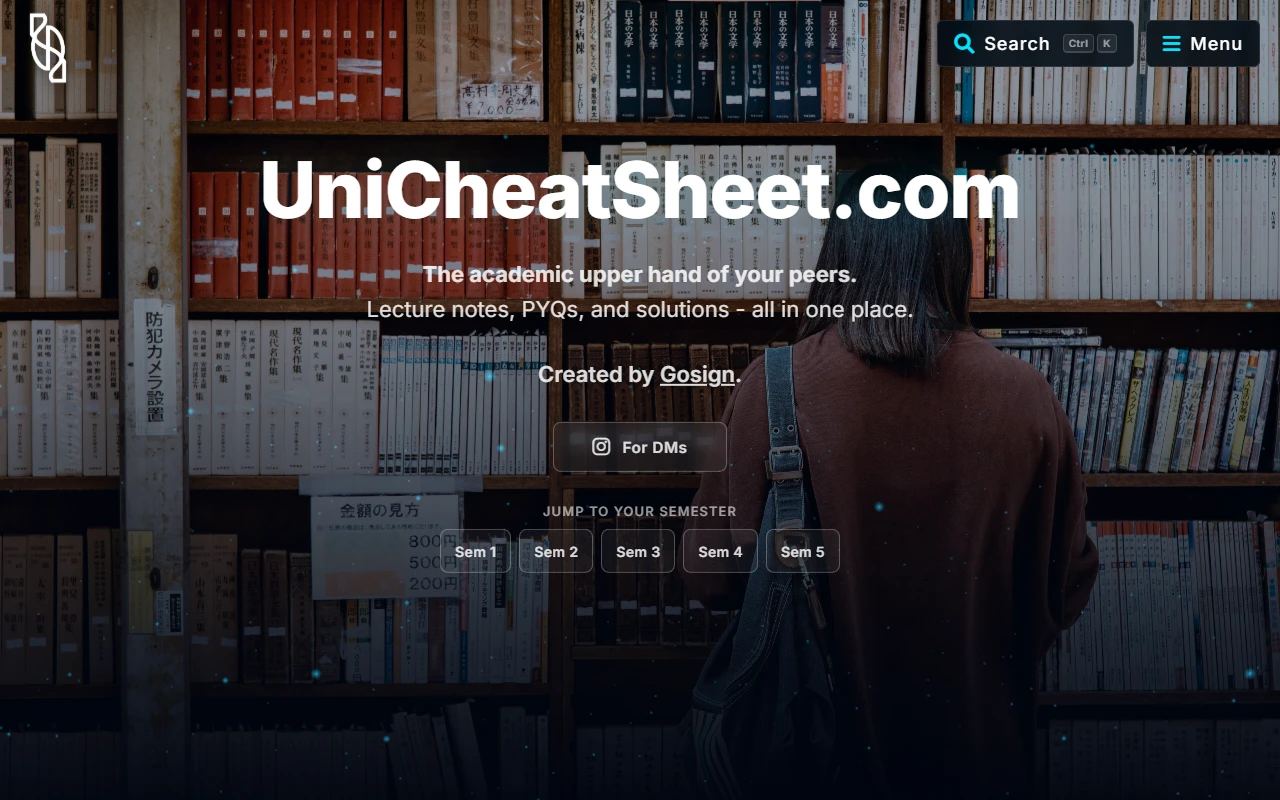
Free · No signup
The videos break down how I built, grew and monetised UniCheatSheet. Watch them in order, right here. No signup, no payment, no email.
I worked this out by trial and error over nearly two years, from October 2024 onwards, and got plenty of it wrong on the way. These are the lessons I’d give myself at the start.
Watch the full playlist on YouTube ↗
Lesson 01 · 1:40
Why arriving first compounds, and how to spot a campus problem nobody has claimed yet.
Lesson 03 · 7:19
How to cut clicks until a stressed student finds what they came for in seconds.
Lesson 04 · 1:27
Working out which advantage you already have (social, academic, technical, creative) and building from it.
Lesson 05 · 5:02
The exact path from finding a resource → paying → getting access, and why I kept it simple.
Lesson 06 · 2:32
When manual payments beat automation, and how to tell when that stops being true.
Lesson 07 · 5:17
How I automated repetitive DMs and FAQs instead of typing the same thing twenty times.
Lesson 08 · 2:21
What to charge students, when to raise it, and why I waited four semesters too long.
The videos give you the decisions. If you want to put them into practice without starting from an empty project, the Starter Kit gives you the reusable starting point.
Optional · The only paid thing here
$19One-time payment
From India and want the Kit? →Message KIT on Instagram.
Your Starter Kit and the setup walkthrough will be sent to the email address you provide at checkout.
You don’t need this to watch the videos, and you don’t need it to build something. It’s a head start, not a gate.
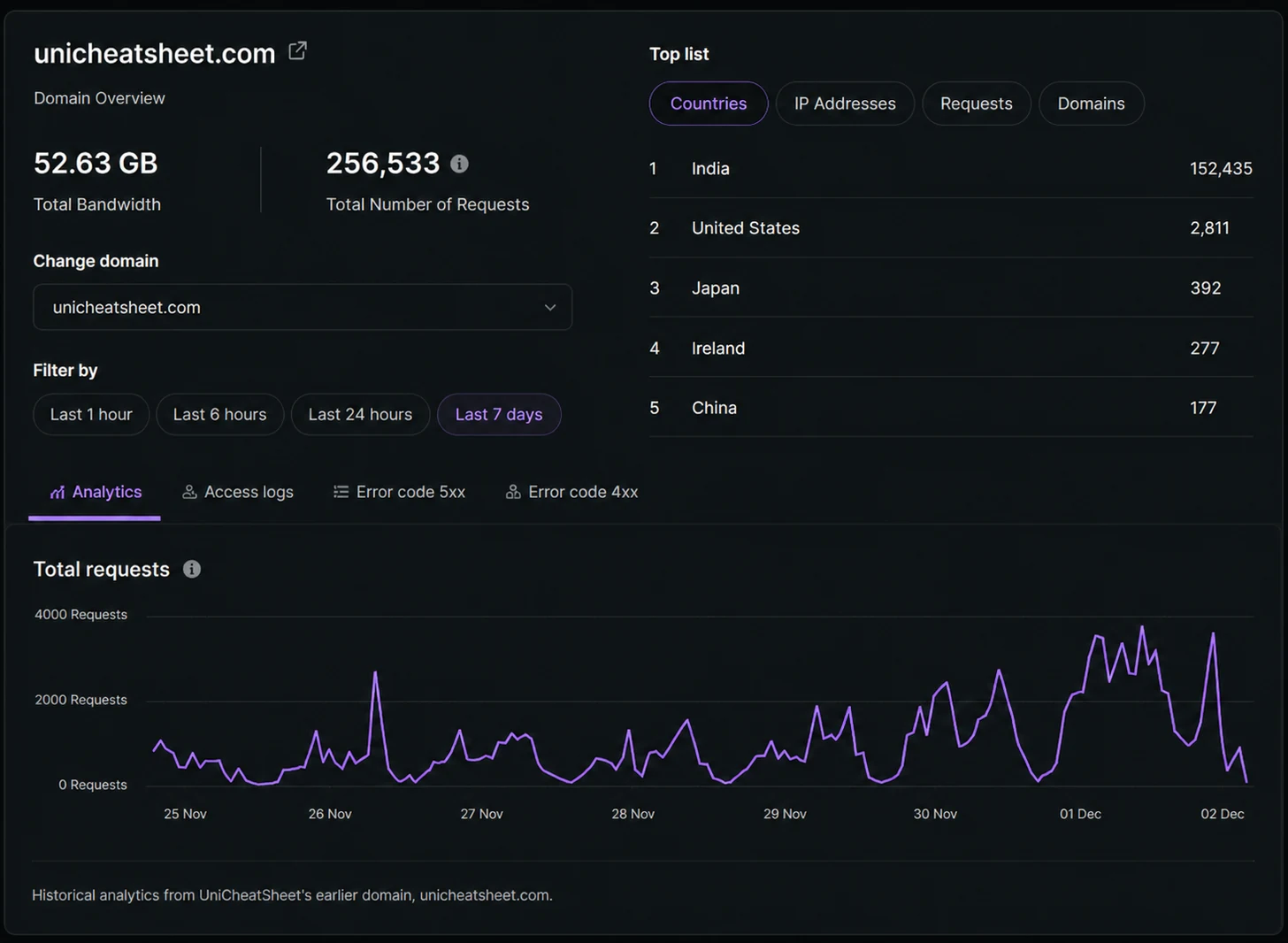
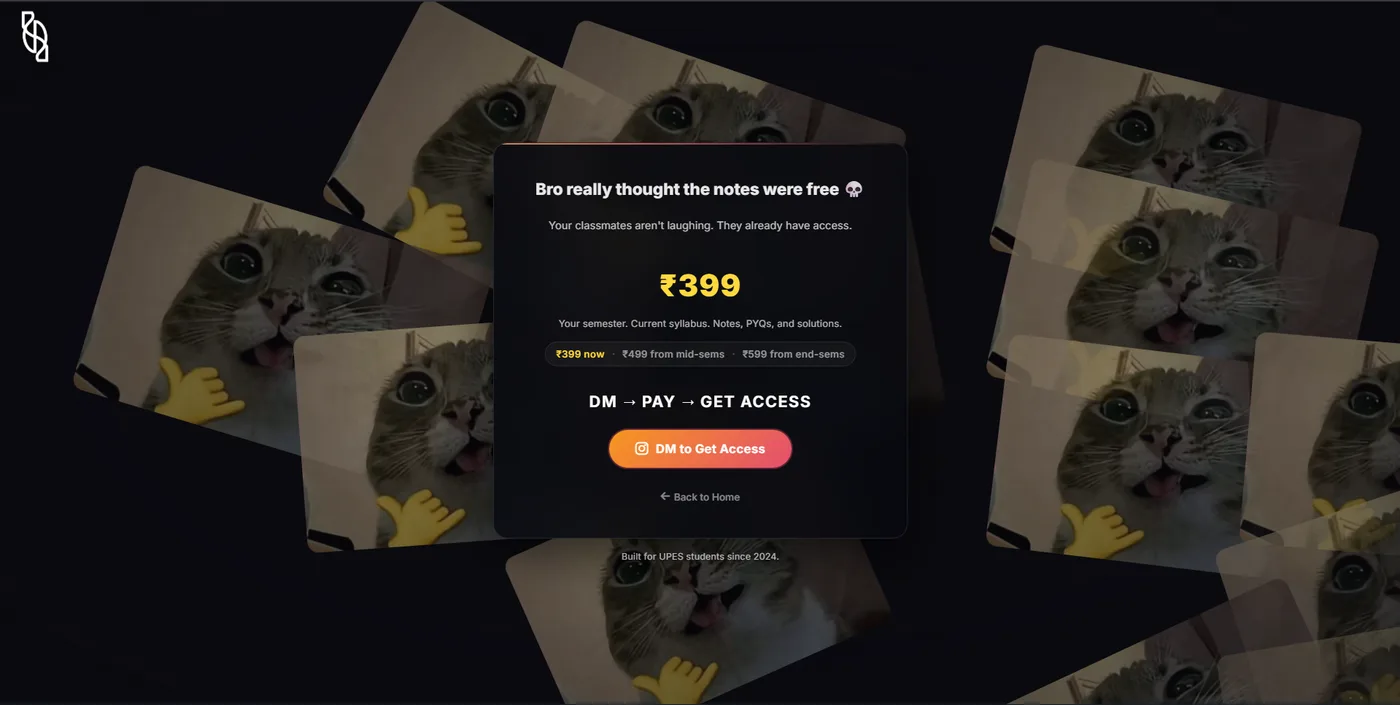
My results. Not a promise of yours.
October 2024
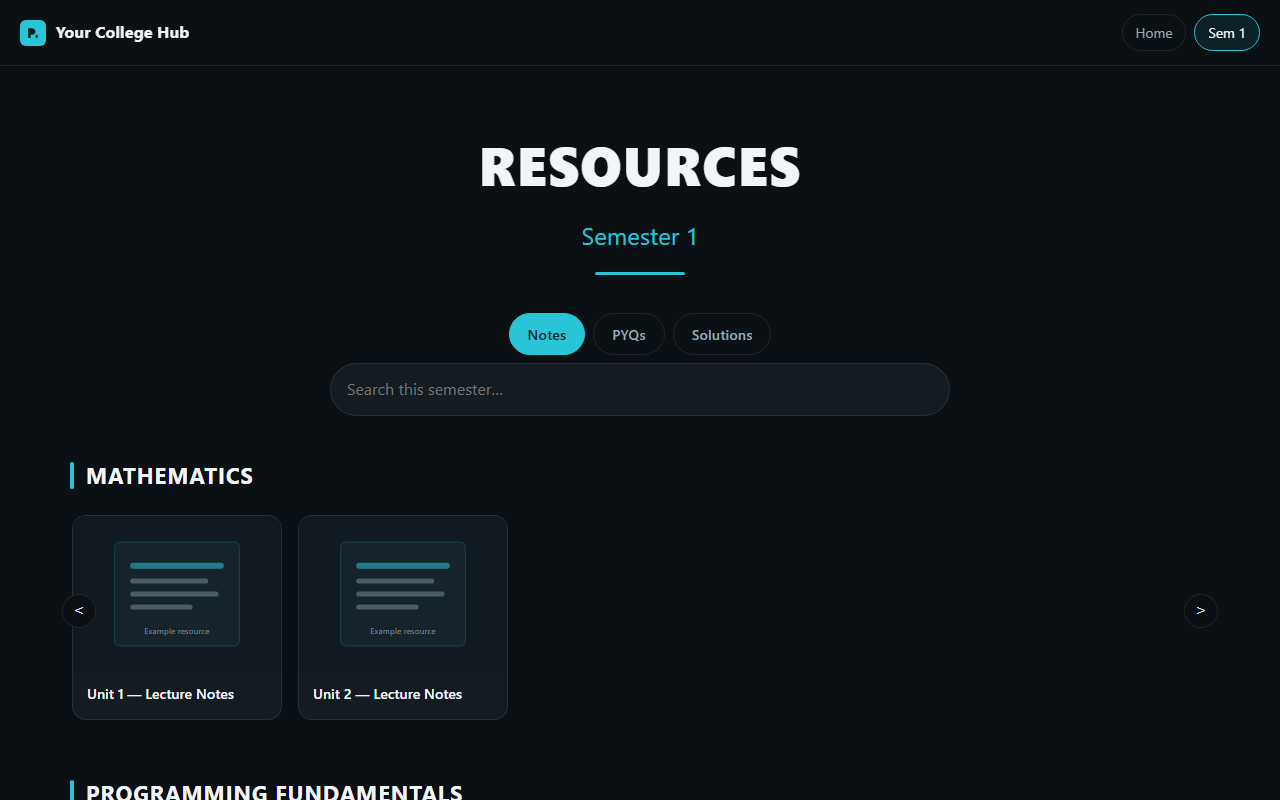
Before a maths midterm, I built the first version of UniCheatSheet for a problem I had myself. That part took a night. Working out what made students keep using it has taken every semester since.
What I built that night was five buttons over the resources I already had. Everything worth teaching came from what happened next.
One semester later, every student on campus was using it.
Putting notes, PYQs and solutions on one website is the easy part. Getting students to actually use it, come back to it, and eventually pay for it is where the real decisions begin.
This is about decisions, not syntax.
The video lessons break down those decisions in the order I faced them, and they cost nothing.
You notice problems.
You want real users.
You'll actually build.
You're willing to learn as you go.
Yes, genuinely free — every lesson, in full, with no signup, no email and no account. Watch them right here on this page or on the public YouTube playlist; they are the same videos either way. Nothing on this page unlocks them, because nothing locks them.
The Starter Kit, and only the Starter Kit. It's the Implementation Kit — a reusable template built on the same architecture as UniCheatSheet — plus a walkthrough of about fifteen minutes showing what to change and where. It is not the videos, and buying it does not unlock anything on this page.
A working template, not a tutorial. It's set up the way UniCheatSheet is set up, so what you change is your university, your subjects and your resources — not the structure underneath them. The walkthrough shows you which files those are.
You don't need to be an experienced developer. The lessons are about product and distribution decisions, not syntax. Building your own version still takes real effort — the Starter Kit is there so that effort goes into your university's content rather than into the structure underneath it.
No guarantees, and I won't pretend otherwise. What I can hand over is what I built, what actually happened, and the decisions behind both. What you get out of it depends on your campus and your execution.
You can. I did — it took nearly two years of trial and error, and plenty of it was wrong. The videos are that ground already covered, mistakes included, and they cost you nothing. The Starter Kit only saves you the rebuilding.
No. It applies wherever there's a recurring academic-resource problem and a concentrated student community.
The video lessons are taught in English.
Email me with the order ID from your payment receipt and I'll sort it personally. Check the spam folder of the address you gave at checkout first — that's where it usually is.
Anything else? Email me.